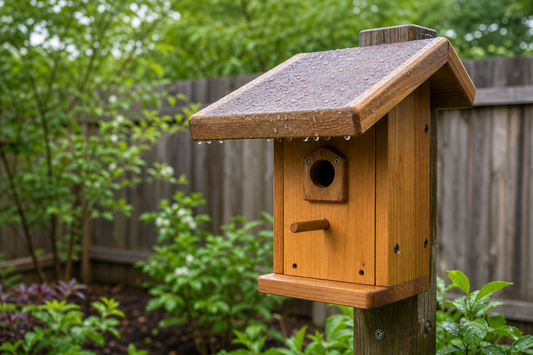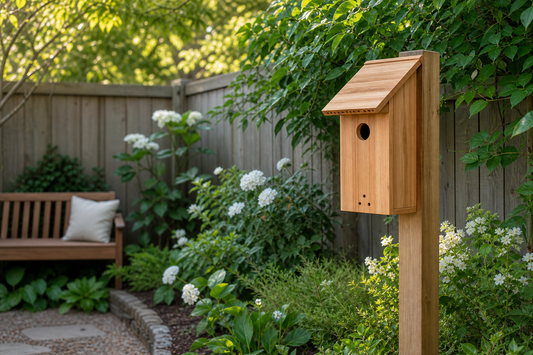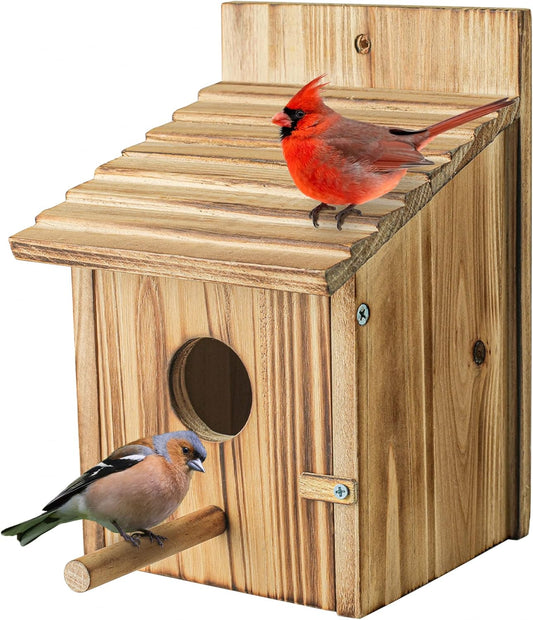

Where to Hang a Bird House in Your Garden
Choosing a bird house is only the first step. Where you hang it can affect whether the house feels safe, comfortable, and easy for birds to approach. A good location should be quiet, stable, sheltered from harsh weather, and simple for you to inspect between seasons.
If you are adding a wooden bird house to your garden, patio, fence, or backyard, use this guide to think through height, shade, direction, spacing, and common placement mistakes before you install it.
Why bird house placement matters
Birds look for nesting spaces that feel protected. A bird house placed in a busy walkway, near a loud door, or in full afternoon sun may be less appealing than one placed in a calm, sheltered part of the yard. The goal is to give small backyard birds a clear approach path and a quiet place to settle.
Placement also affects maintenance. Outdoor bird houses should be checked after strong weather and cleaned between nesting seasons. If the house is too difficult to reach safely, it may be harder to keep in good condition.
How high should you hang a bird house?
There is no single perfect height for every bird house, because different bird species have different nesting habits. For many small backyard bird houses, a moderate height above the ground works well. The house should feel elevated and protected, but still be reachable for seasonal cleaning and inspection.
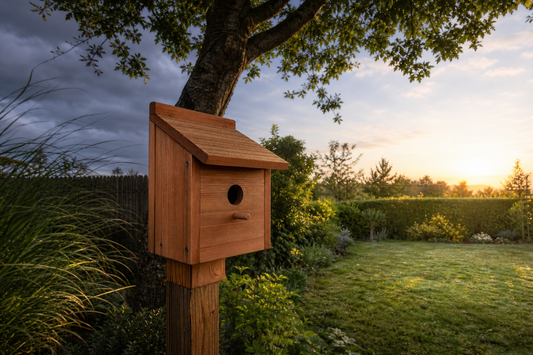
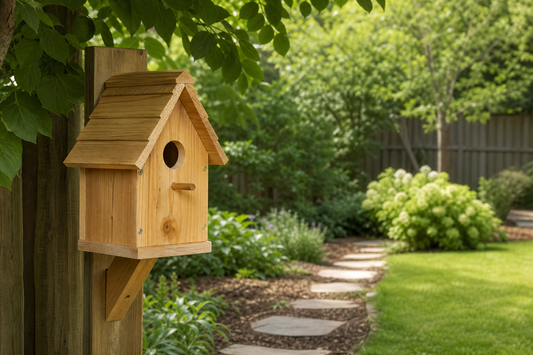
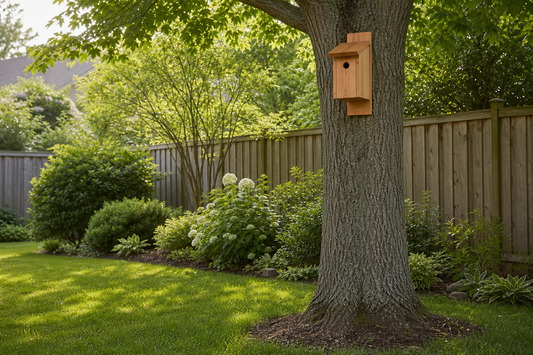
Avoid placing a bird house so low that it is easy for pets, children, or unwanted visitors to disturb. Also avoid hanging it so high that you need unsafe tools or awkward climbing to maintain it. A stable fence post, tree trunk, wall hook, or garden pole can all work if the house is secure.
Choose a quiet, low-traffic area
Birds are more likely to explore a bird house when the area around it feels calm. Try to choose a location away from frequent foot traffic, outdoor dining areas, garage doors, loud equipment, and places where people gather for long periods.
A back corner of the garden, a quiet fence line, or a sheltered tree area can be a better choice than the center of a busy patio. If you want to enjoy birdwatching, place the bird house where you can see it from a window or seating area without standing too close to it.
Look for shade and weather protection
Outdoor bird houses are exposed to sun, rain, wind, and changing temperatures. A location with some natural shade can help keep the interior more comfortable, especially during hot afternoons. A nearby tree canopy, fence, porch edge, or garden structure may offer helpful shelter.
At the same time, avoid placing the bird house in a damp, enclosed spot where air cannot move. Good placement should balance shade, airflow, and protection from direct weather. If your yard gets strong wind from one direction, choose a mounting point that gives the house a little cover.
Face the entrance toward a safer direction
When possible, avoid aiming the entrance directly into strong prevailing wind or heavy rain. A bird house entrance that faces a calmer direction can help reduce weather exposure inside the nesting space.
In many gardens, the best direction depends on local weather, surrounding trees, fences, and buildings. After a storm, check whether rain is blowing directly into the entrance. If the location feels too exposed, move the bird house to a more protected spot before the next nesting season.
Keep the approach path clear
Birds need a clear path to enter and leave the house. Avoid placing the entrance directly behind thick leaves, tangled vines, or decorative objects that block access. Nearby branches and shrubs can provide cover, but the entrance itself should not be crowded.
If you hang a bird house in a tree, make sure branches do not rub against the roof or block the opening. If you place it on a fence or wall, leave enough open space around the entrance so birds can approach comfortably.
Do not place bird houses too close together
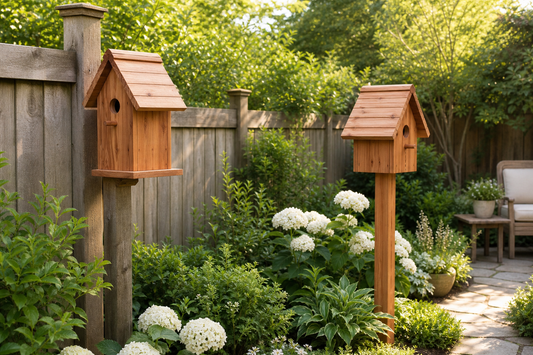
If you have more than one bird house, give them space. Some birds are territorial during nesting season and may avoid houses that feel too close to other active nesting areas. Spacing can also reduce crowding and make each house easier to monitor.
For a larger garden, you can place bird houses in different zones, such as one near a quiet tree line and another near a back fence. A multi-room birdhouse can create a stronger decorative focal point, but individual houses still benefit from thoughtful placement.
Use a secure mounting point
A bird house should not swing wildly, tilt forward, or feel loose after installation. Whether you use a hook, rope, pole, fence post, or wall bracket, make sure the mounting point can hold the weight of the house through wind and rain.
Check the roof, hanging loop, screws, and base before each season. If the house has shifted or the hook feels weak, repair it before birds begin using the space. A sturdy setup is better than a decorative display that moves too much.
Place feeders and bird baths with care
Feeders and bird baths can make a garden more active, but nesting birds often prefer a quieter area. If a feeder attracts many birds throughout the day, it may create too much traffic near a bird house.
Try placing feeders and nesting houses in separate areas of the yard. This keeps the bird house calmer while still making your garden friendly to visiting birds. If you use a bird bath, keep it clean and place it where it does not create constant activity right at the entrance.
Common bird house placement mistakes
- Hanging the bird house in a noisy, high-traffic area.
- Placing the entrance directly into strong wind or rain.
- Choosing a spot with full afternoon sun and no shade.
- Letting branches, leaves, or decorations block the entrance.
- Mounting the house too loosely so it swings or tilts.
- Putting several bird houses too close together in a small space.
- Installing the house where it cannot be cleaned safely.
Quick placement checklist
- Choose a quiet part of the yard.
- Use a stable tree, fence, wall hook, pole, or bracket.
- Provide some shade and protection from harsh weather.
- Keep the entrance clear and easy for birds to approach.
- Avoid placing the house too close to busy feeders.
- Check that the house can be reached for seasonal cleaning.
- Inspect the mounting point after strong wind or rain.
The best place to hang a bird house is a calm, sheltered location that feels safe for birds and practical for you to maintain. Start with a quiet area, make sure the house is stable, and adjust the position if weather or activity makes the first spot less suitable.
Explore NATUREYLWL's outdoor bird house collection to compare wooden, colorful, cottage-style, and multi-room designs for your garden.
Previous
How to Choose the Right Bird House for Your Garden
Next
Birdhouse Hole Size Chart for Common North American Birds