How to Choose the Right Bird House Size for Your Backyard
Choosing a bird house is about more than finding a design that looks good in your garden. The size of the house, the entrance opening, the interior depth, and the ventilation all affect how useful the space can be for backyard birds. A house that is too small may feel cramped, while one that is too large may offer less protection than a compact nesting space.
This bird house size guide explains the practical features to compare before adding a wooden bird house to your garden, patio, fence, or backyard.
Why Bird House Size Matters
Cavity-nesting birds look for sheltered spaces that match their body size and nesting habits. The right proportions help create a protected interior, support a stable nest, and reduce unnecessary exposure to weather. Size also affects where you can install the house and how easy it will be to inspect and clean.
There is no single bird house size that is best for every species. The goal is to choose a design that fits the birds commonly seen in your area and the location where you plan to place it.
5 Features to Compare Before You Buy
1. Entrance Hole Size
The entrance is one of the most important measurements on any bird nesting box. Smaller openings are generally suited to smaller cavity-nesting songbirds, while larger birds need a wider opening. An entrance that is much larger than necessary can make the interior more exposed.
Before choosing a house, identify the birds that visit your yard and compare the opening with guidance for those species. Avoid enlarging the hole unless the house is being adapted for a specific bird.
2. Interior Floor Space
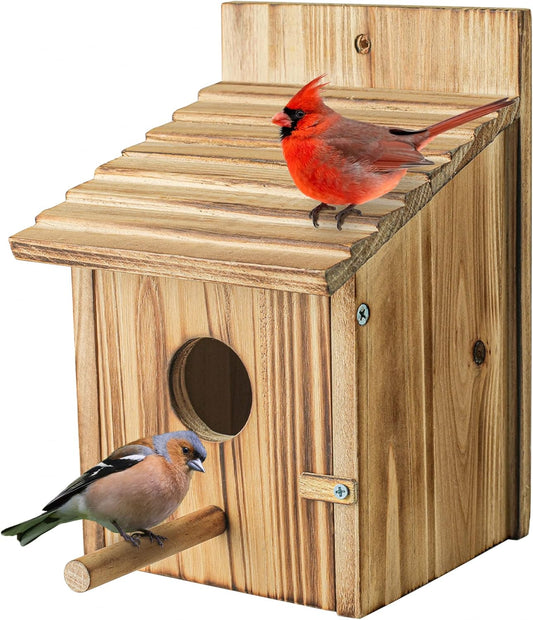
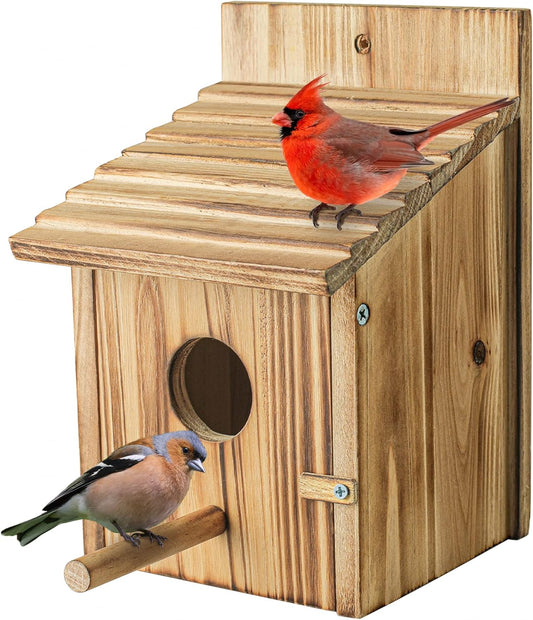
The floor needs enough room for a nest and growing chicks without creating an oversized, open cavity. Compact houses can work well for small birds, while medium-sized houses provide more room for larger backyard species. Product photos can be misleading, so check the listed dimensions rather than judging size by appearance alone.
3. Distance Below the Entrance
A deeper interior places the nest farther below the entrance. This can provide more separation from direct sun, wind, and activity outside the house. Look for a balanced design with enough depth for the intended bird instead of a shallow decorative shell.
4. Ventilation and Drainage
Good dimensions are only part of a functional bird house. Small ventilation gaps near the top help warm air escape, while drainage openings in the floor allow moisture to leave. These details are especially important for an outdoor wooden bird house exposed to changing weather.
5. Cleaning Access
A side, front, or roof panel that opens makes seasonal cleaning easier. A clean-out door should close securely when the house is in use. If you want a house for nesting rather than decoration alone, cleaning access is a practical feature worth prioritizing.
Small, Medium, or Large Bird House?
Small Bird Houses
Small houses are often a good match for compact garden spaces and smaller cavity-nesting birds. They are easy to mount on posts, walls, or trees when the location is suitable. Check that the interior still has adequate depth, ventilation, and drainage.
Medium Bird Houses
A medium house offers more interior room and can suit many common backyard settings. This size is a useful starting point when you want a traditional outdoor birdhouse, but the entrance opening and internal proportions still need to match your target species.
Large and Multi-Room Bird Houses
Large or multi-room bird houses create a strong visual feature in a garden. Some designs are intended for social nesting species, while others are primarily decorative. If attracting birds is your priority, confirm that each compartment has appropriate dimensions, drainage, ventilation, and cleaning access.
Functional Bird House vs. Decorative Garden Birdhouse
A decorative birdhouse can add color and character to a patio, fence, or flower garden. A functional nesting box places more emphasis on interior dimensions, weather protection, and maintenance. Many homeowners want both.
When comparing designs, decide which purpose matters most:
- For nesting: prioritize entrance size, interior depth, untreated interior surfaces, ventilation, drainage, and cleaning access.
- For garden decor: prioritize color, shape, scale, and how the house coordinates with the surrounding space.
- For both: choose an attractive wooden design that also includes the practical features birds need.
How to Match a Bird House to Your Backyard
Start by observing your yard. Note the birds that visit, the amount of shade, prevailing wind, nearby shrubs, and possible mounting locations. Then compare those conditions with the house dimensions.
- Choose a size suited to the bird species you want to support.
- Place the house where the entrance is not exposed to harsh afternoon sun or constant wind.
- Keep the flight path clear of dense obstacles.
- Avoid placing the house directly beside a busy feeder.
- Use a stable mount so the house does not swing or tilt.
- Leave enough access for inspection and seasonal cleaning.
Bird House Size Checklist
Before ordering a bird house for outside, check the following:
- Overall height, width, and depth
- Entrance hole diameter
- Interior floor space
- Distance from the entrance to the floor
- Ventilation near the roof
- Drainage in the base
- Secure hanging or mounting method
- Access panel for cleaning
- Weather-resistant exterior construction
Frequently Asked Questions
What bird house size attracts the most birds?
No universal size attracts every bird. A house is more likely to be useful when its entrance and interior match a local cavity-nesting species and it is installed in a suitable location.
Should a bird house have a perch?
Most cavity-nesting birds can enter without an exterior perch. A simple entrance can also give other animals fewer places to grip near the opening.
Can a bird house be too large?
Yes. A very large cavity may not provide the compact, sheltered environment that a smaller bird naturally seeks. Match the house to the intended species instead of automatically choosing the biggest design.
Does the wood thickness matter?
Sturdy wood helps insulate the interior and supports outdoor durability. Construction quality, roof coverage, ventilation, drainage, and secure joints matter along with the overall dimensions.
Find the Right Wooden Bird House for Your Space
The best bird house balances size, practical construction, and a design that fits your outdoor space. Compare the entrance, interior proportions, ventilation, drainage, and cleaning access before making your choice.
Explore NATUREYLWL wooden bird houses for gardens, patios, and backyards.