
Which birdhouse shape actually attracts the most birds to your yard?
Want more birds in your yard? It's not about the birdhouse shape. It's about meeting a bird's needs. This includes the right space, a secure entrance, and a dry, airy build.
The best birdhouse is one that offers a safe and cozy spot. It's not just about looking good.

While open-ledge nesters like robins choose dense ivy, popular garden cavity nesters—including bluebirds, finches, chickadees, and house sparrows—are always actively scouting for premium nesting sites. Providing a high-quality wooden birdhouse drastically increases your chances of welcoming these vibrant species into your yard.
To increase your chances, try a mix of birdhouses. Add unique wooden bird houses for outside and hanging birdhouses for garden and yard. Also, consider bird houses for outside with pole for extra stability.
A varied setup can attract more species. This can lead to a more diverse garden over time.
Robyn Bailey at the Cornell Lab of Ornithology’s NestWatch says nesting is a key sign of success. Brief, non-intrusive checks can help you learn what works. We'll compare different birdhouse types and discuss important details like entrance size and placement.
What “birdhouse shape” really means to birds
To a bird, “shape” isn't just the cute outline you see from the patio. It's about the floor space, inside height, and where the entrance is. A proper entry hole and its position can make a box feel secure or exposed.
Most garden favourites are cavity nesters. They look for an enclosed chamber with calm, dark corners. Nest boxes can add a safe and cozy spot for small birds. The right entry hole size combined with a charming, nature-inspired roofline creates the ultimate dream home that is both inviting to wild birds and stunning on your patio.

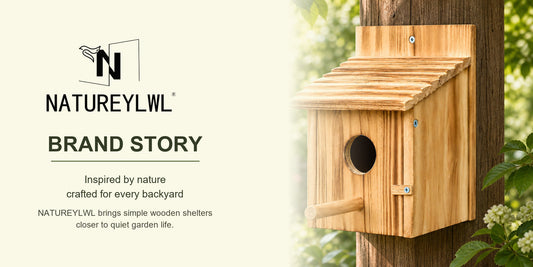
While poorly designed novelty novelty boxes can pose risks, thoughtful crafted themed houses offer the best of both worlds. At NATUREYLWL, our bee and ladybug designs utilize specialized eco-friendly, non-toxic finishes paired with expert internal dimensions, ensuring the shelter remains a camouflage-safe and temperature-regulated haven.
Keeping it simple is often best. Untreated timber is sturdy and breathes better than plastic or metal. A well-built box sheds rain, stays drier inside, and feels natural to inspect. This simple approach supports a safe and cozy nesting spot for small birds through changing seasonal weather.
- Ventilation near the top to reduce heat and damp
- Drainage holes in the floor so water can escape
- Roof overhang or a slight slope to throw off rain
- Thick, untreated wood for insulation and grip
- A conveniently engineered, small perch tailored exclusively for target songbirds to rest and watch, placed carefully to ensure larger aggressive birds cannot gain leverage.
Once the basics are right, the proper entry hole becomes the key for birds. Get the internal space and entry hole size right, and the outside silhouette matters less. That's how a plain box can be both weather resistant and durable, yet inviting at nesting time.
Unique wooden bird houses for outside, Hanging birdhouses for garden and yard
It’s easy to fall for unique wooden bird houses for outside that look like garden art. The good news is that style can work for wildlife. A shaped hanging birdhouse can be both decorative and successful, as long as it has the basics right.

Hanging birdhouses for garden and yard need one extra thing: stability. If the box swings, many birds will avoid it, even in windy spots. Fix the hanger to a firm bracket or add a second tie point so it sits steady.
When choosing a display piece, look past the paint and check the build. A handcrafted wooden birdhouse with exquisite details is only useful if it’s well-made. Premium natural solid wood construction tends to hold up better over seasons, even when the finish fades.
- Ventilation near the top helps prevent overheating on warm days.
- Drainage holes in the floor let moisture escape after heavy rain.
- A neat, sturdy entrance area improves predator resistance.
Colour is fine, but it should support comfort. Bright and eye catching colors look cheerful in a border, yet the inside should stay calm and sheltered. Place the box where it gets some cover from shrubs or a fence, and avoid spots that bake in full afternoon sun.
Timing helps birds notice your setup. Install hanging birdhouses for garden and yard in autumn or winter so they become part of the landscape before spring. Early spring also works, as birds are already scouting for nest sites.
Plan for cleaning from the start, if you’re buying unique wooden bird houses for outside as gifts. A side panel or hinged front makes it quicker to tidy. Clean at least once a year in mid-August, and for species with more than one brood, clear out old material between broods once fledging has happened.
- Check once or twice weekly for under a minute, then leave the area quiet.
- In spring and autumn, scrape out loose nesting material and debris.
- If heavily soiled, wash with soap and water, or use a 1:9 bleach-to-water mix, then rinse well and dry fully.
A shaped hanging birdhouse can be a practical nest site when the “pretty” parts don’t get in the way. Choose solid fittings, sensible airflow, and easy access for cleaning, and you’ll get a garden feature that birds can actually use.
The shapes that attract the most birds in UK-style gardens (box, open-front, and colony houses)
In your backyard, the best shape is one that birds like to nest in. This means hidden spots, safe ledges, or places where they can nest together. A neat roof is nice, but birds look for safety, the right space, and a quiet spot to raise their young.
Seeing a product called wooden bird house for finch bluebird cardinals is a good start. But remember, what local birds need is more important than what the label says.
Classic single-chamber box birdhouses (most reliable for small cavity nesters)
A simple box is the most reliable choice for many garden birds. They like a single, enclosed space. The key is the usable space, a snug floor, and a dry roof.
Small details can make a big difference. For example, interior grooves in a bluebird house can help fledglings climb out.
Apartment/colony-style houses (high occupancy where the right birds are present)
Colony houses work well for social birds that don't mind neighbours. They're placed high and open for easy flight paths.
Some birds like company, while others prefer to be alone. Wrens, for example, like their space. Bluebird boxes are often 50–75 yards apart.
When looking for a 6 hole outdoor bird house, think about which birds nest in groups. Choose the layout and spacing that suits them.
Open-front shelters (special case for ledge nesters)
Open-front designs are for ledge nesters, not cavity nesters. They're often on a building wall, under an eave, or on an arbor. In garden landscapes, the right bird for the right place rule applies, even if the packaging says something else.
Entrance hole shape and size: the real “make or break” detail
The entrance is key to a birdhouse's success. Ensure the right diameter and height for the hole. This guides the right birds in and prevents overcrowding.
Keeping the entrance clean is also important. A removable compartment makes cleaning easy. This keeps the inside dry and healthy. A simple latch makes opening the box quick and easy.
Proper entry hole size for wild birds (and why small is often better)
Small holes reduce competition and make the box safer, keeping other birds out.
In urban areas, a 1.25" hole lets in chickadees and wrens but keeps out House Sparrows. The right hole size is not just about who gets in. It's also about who stays out.
Oval/elliptical entrances for larger species and predator resistance
Larger birds like wood ducks and screech-owls prefer oval entrances. The shape also deters predators.
For larger openings, easy cleaning is essential. A removable compartment lets you inspect without harm. A simple latch makes checks quick and easy.
Keep larger predators and squirrels out
In UK gardens, threats like squirrels, raccoons, snakes, cats, and House Sparrows are common. Good design keeps them out without cluttering the box.
- Skip perches; they are not needed and can help unwanted visitors reach the entrance.
- Add a reinforcement plate or predator guard around the opening to reduce chewing and clawing.
- Use a pole baffle, with a stovepipe-style baffle as a strong option on smooth poles.
When these details work together, the entrance becomes a controlled doorway. Aim to keep larger predators and squirrels out while welcoming your target species.
Materials, colours, ventilation, and drainage: what boosts occupancy and fledging success
Wood is the top choice for most garden birds' nests. It's porous, letting moisture out and keeping the box steady in all weather. Opt for untreated timber with thick walls for better insulation and a calm inside.
Plastic and metal boxes can get too hot in the sun, stressing chicks. But, purple martin boxes are an exception. They're often made of aluminium or dried gourds, painted white to reflect heat, and have special airflow. In UK gardens, wood is simpler and more durable through the seasons.
Colour is important, but not in the usual way. Earth tones and natural finishes help birds blend in and feel safe. Bright colours might look fun but can attract predators.
To protect the nest, treat the outside with natural preservatives like linseed oil. Leave the inside bare. This keeps the scent and surface safe for birds while keeping the box weatherproof. The goal is a safe, cozy spot, not a decoration.
- Ventilation: a narrow gap or small vents near the top help hot air escape.
- Drainage: a few holes in the floor let rainwater and damp out, so nests stay dry.
- Roof design: a sloped roof with a small overhang sheds rain and cuts drafts at the entrance.
- Cleaning access: a hinged side or front panel makes annual cleaning quicker and more hygienic, which helps repeat use.
Placement by habitat and height: matching the house shape to where birds actually nest
Shape is important, but where you place the bird house matters more. Think like a bird when setting up a bird house. Look for food, cover, and a clear path.
When you find a deal on a hanging birdhouse, make sure it's in the right spot. The goal is a safe and cozy nesting spot with the right light, shelter, and space.
Habitat matching: who nests where
- Bluebirds favour open grass and insect-rich fields, with a clean flight path. A box on a post facing open ground suits them.
- Chickadees do better near thickets and mixed shrubs, where cover is dense and natural.
- House wrens like woody edges and garden borders. A hanging box from a small tree can work if it stays steady.
- Tree swallows use similar boxes to bluebirds, but often do best near water where flying insects gather.
- Purple martins prefer colony housing in open lawn or field, often near water, with nearby wires for perching.
- Robins and some other species may use an open-front shelter on a ledge, under eaves, or beneath a deck for weather cover.
Many shoppers search for a hanging birdhouse for bluebird robin cardinal sparrow and finch. But these birds don't all choose the same style or setting. Matching the site to the species keeps the nest calmer and more settled.
Height guidelines that affect occupancy
- Bluebirds: around 1.5–2.5 metres on a post is a common sweet spot.
- Chickadees: roughly 1.2–2.5 metres in a thicket or near shrubs.
- House wrens: about 1.5–3 metres, often along a hedge line or garden edge.
- Purple martins: about 4.5–6 metres on a tall pole in open ground.
- Wood ducks and screech-owls: higher placements, often 3.5–12 metres, with wood ducks also sited above open water on a post.
Remember to space out bird houses. Too many can cause fights. Avoid doubling up on the same species in a small area.
Stability and siting tips that prevent rejection
- Keep houses away from busy feeders, where traffic and noise can put birds off.
- Angle the entrance slightly downward to reduce wind-driven rain.
- Secure mounts so the house does not swing or rattle; a steady perch reads as a safe and cozy nesting spot.
- Use a firm post or bracket for bird houses for outside with pole, and check fixings after storms.
Even a pretty hanging birdhouse can be ignored if it's unstable or in the wrong spot. A calm, stable set-up helps a hanging birdhouse for bluebird robin cardinal sparrow and finch feel usable in day-to-day garden conditions.
NATUREYLWL decorative shapes (ladybug, bee, church) and how to make them genuinely bird-friendly
NATUREYLWL combines garden beauty with a purpose. Natureylwl decorative birdhouses can be more than just decorations. A ladybug or bee shaped birdhouse can be a safe nest box if made right.
Use premium, eco-friendly wood and solid joints. Ensure the inside is snug and safe for birds. This makes the birdhouse a trusted home.
For chicks to survive, use thick, untreated timber for insulation. Add small vents and drainage holes. A sloped roof with an overhang helps rain run off quickly.
Keep the finishes natural and earthy. Avoid bright paint, as it can attract the wrong visitors. A calm entrance area is key for cross design bird houses.
Don't include perches. They don't help nesting birds and can attract predators. Match the entrance and chamber size to the bird species you want to attract.
This increases the chances of the birdhouse being used. A bee shaped birdhouse will attract birds for the right reasons, not just its look.
Church shaped wooden birdhouses need smart protection for real gardens. Add a metal hole plate or predator guard. Mount the box firmly and use a pole baffle to deter cats and snakes.
Choose church shaped wooden birdhouses for sparrows if the entrance size is right. Clean out after the season and between broods. A 1:9 bleach rinse is optional, but always rinse and dry fully.
Even with a cute bee design, the safest birdhouses are those made for birds first.
FAQ
Which birdhouse shape actually attracts the most birds to a garden?
The classic single-chamber box is the most reliable. It suits many cavity nesters. But, it's the internal space and entry hole that attract birds, not just the shape.
What does “birdhouse shape” really mean to birds?
Birds see shape as internal dimensions and entrance size. They care more about a safe, dry spot than the design.
Which favorite garden birds will eagerly use these birdhouses?
Cavity-nesting favorites like bluebirds, finches, wrens, swallows, and sparrows are highly drawn to enclosed wooden birdhouses. For social species, setting up a 6-hole outdoor bird house is the fastest way to build a thriving backyard bird community.
Why does putting up a few different boxes increase occupancy and diversity?
Different birds need different homes. A mix of boxes increases the chances of attracting local birds. Monitoring helps you learn what works best.
What types of birdhouses should I test in a UK-style garden?
Try classic boxes, open-front shelters, and colony houses. Focus on entrance size, predator resistance, and habitat matching.
Are apartment or “6 hole outdoor bird house” designs always a good idea?
Only for species that nest in colonies. These designs work for purple martins but are safer for single birds.
Do open-front shelters work, and what size should they be?
Yes, for ledge nesters. A 6"×6"×8" size is common. Place them on buildings or trees, not in barns.
Are oval or elliptical entrances ever better than round holes?
Yes, for larger birds. Wood ducks and screech-owls prefer 4"×3" oval openings. Ovals also deter predators.
How do I keep larger predators and squirrels out?
Use predator guards and metal plates at entrances. Pole baffles are effective. Avoid perches to prevent predator access.
Do perches help birds use a birdhouse?
No. Perches are unnecessary and can attract predators. A no-perch design is safer for birds.
What materials are best for a weather resistant and durable birdhouse?
Wood is best for durability and ventilation. Metal and plastic can overheat. Purple martin houses are an exception.
Are colorful designs like the NATUREYLWL ladybug or bee houses safe for nesting?
Yes, absolutely. When crafted with premium natural solid wood and non-toxic, eco-friendly paint, these whimsical shapes blend beautifully into garden borders. They offer eye-catching backyard aesthetics for you while maintaining a shaded, secure, and well-ventilated nursery inside for wild birds.
What ventilation, drainage, and roof details improve nesting success?
Ventilation, drainage, and a sloped roof are key. Thick wood and a closed chamber keep chicks safe.
When should I install birdhouses in the UK?
Install in autumn or winter. Late spring is also good. This gives birds time to find them.
How often should I clean a birdhouse, and what’s the safest method?
Clean once a year, ideally in mid-August. Use a 1:9 bleach-to-water solution for heavy soiling. Rinse and dry well.
How should I monitor a nesting birdhouse without disturbing birds?
Check once or twice weekly for a minute. Keep it calm and consistent. This supports hygiene and understanding.
Where should I place boxes for the best chance of occupancy?
Match the box to the habitat. Bluebirds like open fields, chickadees thickets, and wrens woody spots. Tree swallows prefer water.
What height should birdhouses be mounted at?
Height varies by species. Purple martins need 15–20', bluebirds 5–8', and chickadees 4–8'.
Do hanging birdhouses for garden and yard work as well as mounted boxes?
Hanging works if stable. Secure the house and aim the entrance downward to reduce rain entry.
Should I place birdhouses near feeders?
Keep them apart. Nest boxes near feeders see more disturbance and competition, reducing occupancy chances.
How far apart should multiple birdhouses be spaced?
Space them to reduce conflict. Wrens prefer distance, and bluebirds 50–75 yards apart. Aim for two houses per acre per species.
Can NATUREYLWL decorative birdhouses be both stylish and bird-friendly?
Yes, if they keep nest-box specs intact. NATUREYLWL's solid wood construction supports safe nesting when matched to the bird.
Do ladybug and bee-shaped birdhouses actually attract wild birds?
Yes! Because NATUREYLWL integrates strict biological specifications into our whimsical shapes—such as the precise 1.57-inch entrance hole and extended sloping roofs—birds are naturally drawn to them for their ideal internal dimensions, security, and weather-resistant comfort.
Are church shaped wooden birdhouses and cross design bird houses for outside suitable for nesting?
They can be, if they follow nest-box rules. Church shapes for sparrows need controlled entrance sizes and predator protection.
What should I look for if I want a decorative birdhouse that’s easy to maintain?
Choose designs with easy cleaning features. A removable compartment or hinged side panel is best. Simple designs are more likely to be used.
Can one birdhouse suit finch, bluebird, cardinals, and others?
Not perfectly. Different species need different sizes and habitats. Choose the target species first, then match the box.
What extra features help bluebirds and swallows succeed in a nest box?
Interior grooves help chicks climb. Good ventilation, drainage, and a predator-resistant mount are also key.
Is a small bird nesting box suitable for every small bird I see?
Only for cavity or ledge nesters. Different birds have different needs. Choose the right box for your local species.